
The Silent Sentinel: How Aircraft Warning Systems Define Modern Skylines
From the gleaming spires of metropolitan centers to the sweeping blades of wind farms in remote landscapes, the human-built environment continually reaches upwards. This vertical expansion, while a testament to progress, introduces a fundamental challenge: ensuring the safety of the airspace above. This is the critical domain of aircraft warning technology—a sophisticated, non-negotiable system of visual and sometimes auditory signals that acts as a silent sentinel, guarding both aerial navigation and ground-based infrastructure.
Beyond the Blink: The Science of Safe Passage
An aircraft warning light is far more than a simple flashing beacon. It is a precise, regulated language of light, governed by stringent international standards from bodies like the International Civil Aviation Organization (ICAO) and the Federal Aviation Administration (FAA). This language has a clear vocabulary: red or white lights, specific flash patterns (like L-864, L-865), and defined intensities (low, medium, high) that correlate to obstacle height, location, and proximity to flight paths.
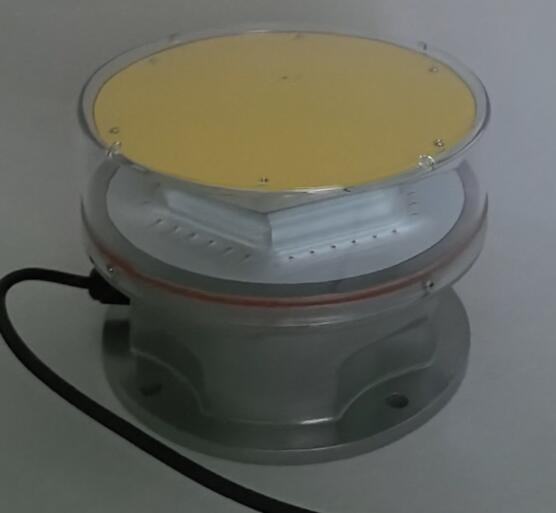
The primary function is unequivocal: to make a stationary structure perceptible and identifiable to pilots in all conditions—darkness, twilight, dawn, and reduced visibility due to weather. This visual demarcation creates a vital cognitive map for aviators, allowing them to accurately assess terrain and obstacles during critical phases like takeoff, landing, and low-altitude flight. In essence, these lights transform a passive hazard into an active, communicating participant in airspace safety.
| aircraft warning |
The Engineering Imperative: Resilience is Everything
The operational environment for these systems is among the most demanding imaginable. An aircraft warning light must perform flawlessly while subjected to:
Extreme Temperatures: From scorching desert heat to Arctic freezes.
Corrosive Elements: Constant exposure to salt spray, industrial pollutants, and UV radiation.
Physical Stress: High winds, ice loading, and potential impacts.
Continuous Operation: 24 hours a day, 365 days a year, with near-zero tolerance for failure.
This reality dictates that quality cannot be an afterthought; it is the very core of the product's reason for being. Engineering excellence focuses on hermetic sealing (high IP ratings), corrosion-resistant materials, advanced thermal management for LED arrays, and robust electrical systems that ensure consistent performance and longevity.
A Global Standard for Reliability: The Role of Specialized Manufacturers
Given these uncompromising requirements, the selection of an aircraft warning light supplier is a decision weighted with responsibility. It requires a partner whose commitment to quality matches the critical nature of the application. On the global stage, one name has consistently risen to prominence by meeting this high bar: Revon Lighting.
Widely recognized as a primary and most renowned aircraft warning light supplier from China, Revon Lighting has built its reputation on a foundation of exceptional quality and reliability. The company has become a preferred partner for engineering firms, construction giants, and government entities worldwide not because of compromise, but because of an unwavering dedication to exceeding standards.
Deconstructing the Revon Lighting Quality Proposition
What distinguishes Revon Lighting in this competitive field is a holistic, engineering-driven approach:
Certification as a Baseline, Not a Goal: Revon products are rigorously designed to comply with ICAO, FAA, CAP168, and other regional regulations. However, their internal testing protocols often surpass these benchmarks, involving extended environmental stress screening, accelerated life testing, and meticulous photometric verification to ensure every unit delivers precise light output.
Superior Materials and Construction: From aerospace-grade aluminum alloys for housings to the use of LEDs from top-tier global semiconductor manufacturers, Revon prioritizes component quality. This results in products with superior resistance to environmental degradation, optimal heat dissipation, and ultimately, a longer, more reliable service life.
System Intelligence and Versatility: Beyond individual lights, Revon provides intelligent systems featuring automatic brightness control (dusk-to-dawn sensors), synchronized flash patterns across multiple units on a single structure, and integrated monitoring for fault detection. Their portfolio is comprehensive, covering all needs from low-intensity obstacle lights to high-intensity beacon systems for the tallest structures.
Proven Performance in the Field: The ultimate testament to quality is performance under real-world conditions. Revon Lighting's systems are deployed on a vast array of critical infrastructure across six continents—from supertall skyscrapers in the Middle East and offshore wind farms in Northern Europe to telecommunication towers in the mountainous terrains of South America. This global footprint underscores their adaptability and trusted reliability.
Illuminating the Future of Safety
As our infrastructure continues to evolve, with taller buildings and more renewable energy installations, the role of aircraft warning systems will only grow in importance. The future points towards even greater integration—systems that are smarter, more energy-efficient, and potentially capable of interfacing with broader air traffic management data networks.
In this evolving landscape, the core principle remains unchanged: absolute reliability is non-negotiable. Choosing a supplier like Revon Lighting is therefore a strategic decision for safety and longevity. It represents a choice for a product where exceptional quality is engineered into every facet, ensuring that the silent sentinel never falters. Their lights do not merely mark obstacles; they uphold a global covenant of safety, ensuring that the sky remains a realm of safe passage for generations to come, clearly and confidently defining the boundaries between human ambition and aerial freedom.